Part of the Festival of Migration collection
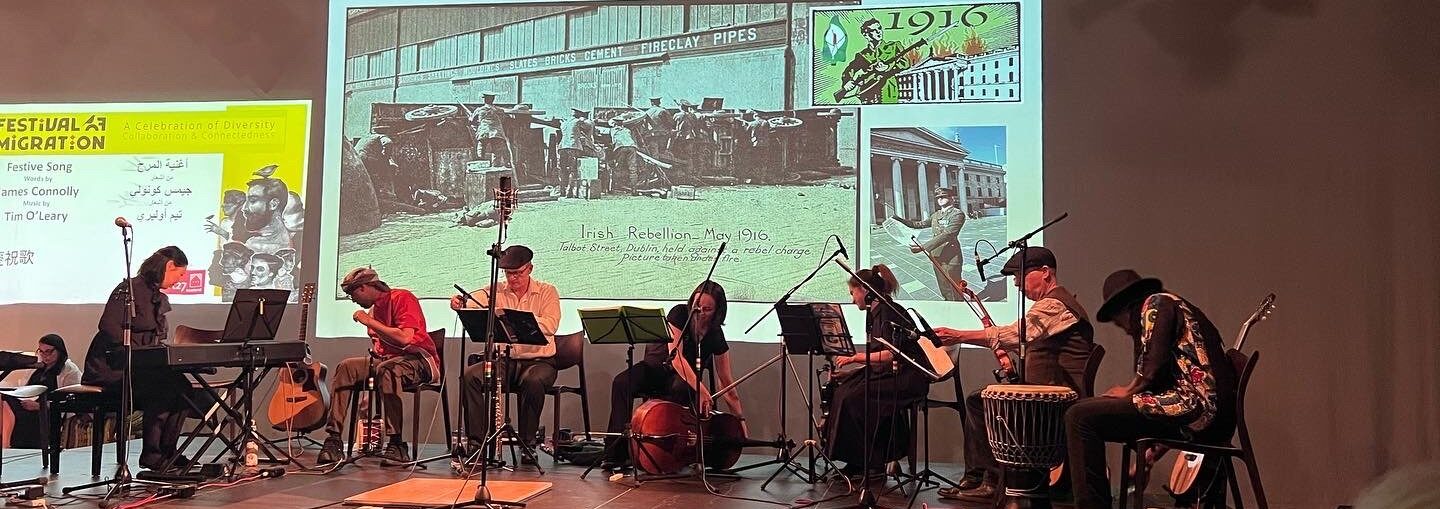
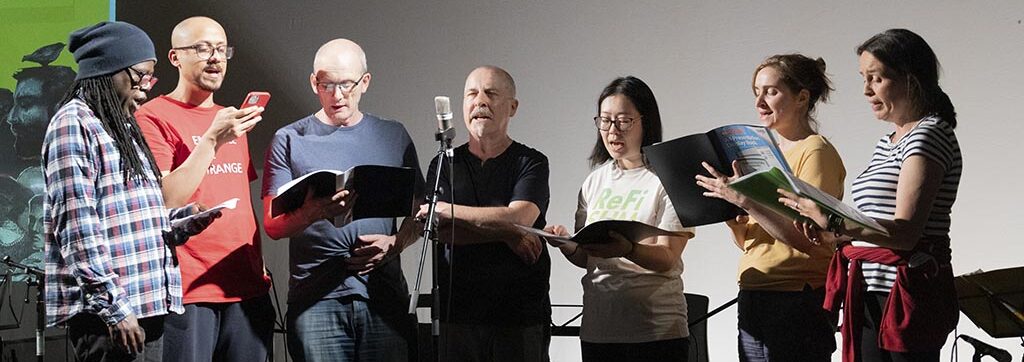
Southside Symphony a musical evocation of diversity of Southside.
About this event
The Southside Symphony
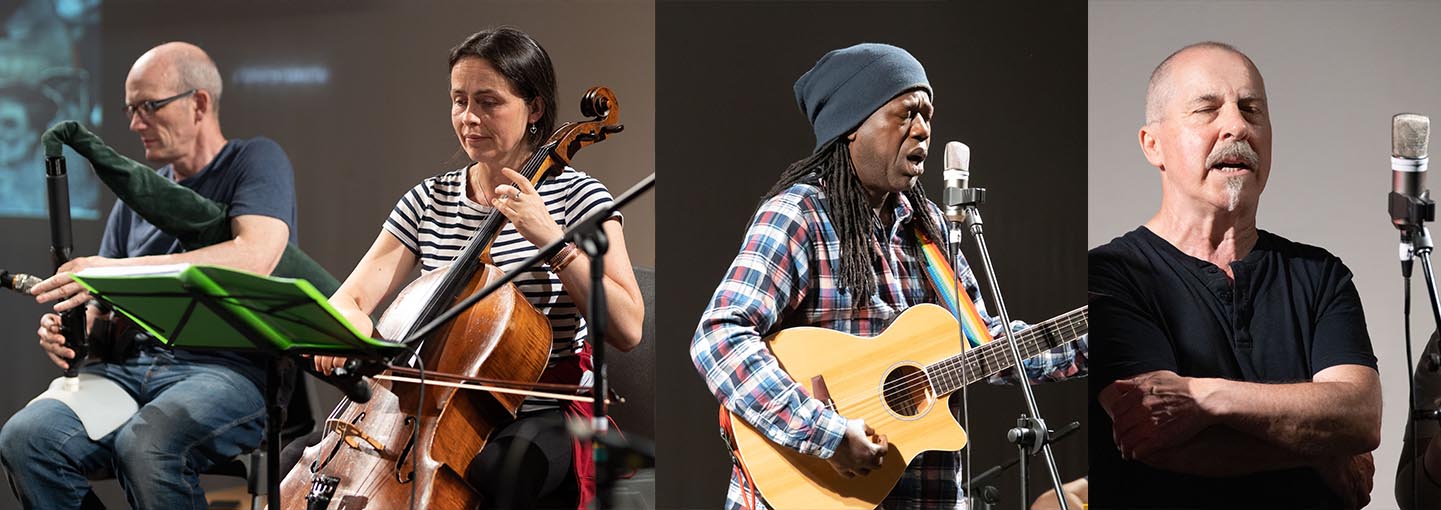
Art27 commissioned Iranian photographer Laleh Sherkat to capture the dynamic spirit of the Southside, an ever changing and vibrant centre for many of Edinburgh’s migrant communities, old and new. Inspired by Laleh’s work Art27 commissioned six of the musicians we have worked with to respond through their own compositions to our Festival of Migration theme.
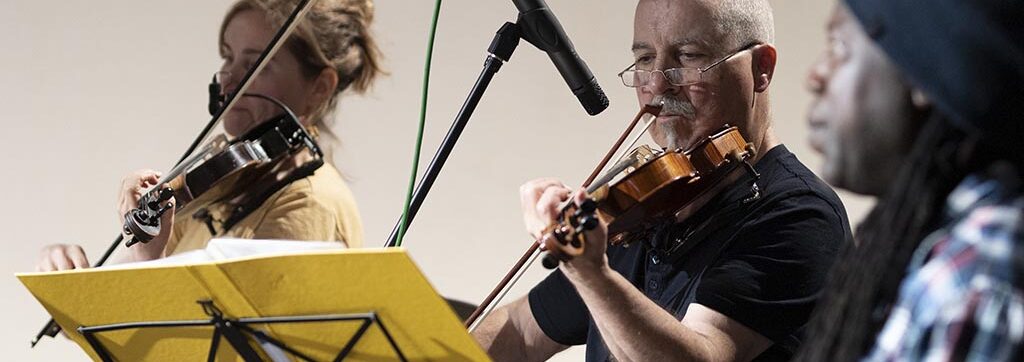
Southside Symphony opens with the newly composed Southside Set, by Katherine Campbell. Katherine is from Fochabers, a village in the North of Scotland on the East bank of the River Spey, where she was tutored by the legendary fiddler and teacher James Alexander before going on to a classical music education in Glasgow’s Conservatoire. Like many others, Katherine has made the journey from rural Scotland to the city, it is estimated that today some 56% of the world’s population – 4.4 billion inhabitants – live in cities. This trend is expected to continue, with the urban population more than doubling its current size by 2050, at which point nearly 7 of 10 people will live in cities.
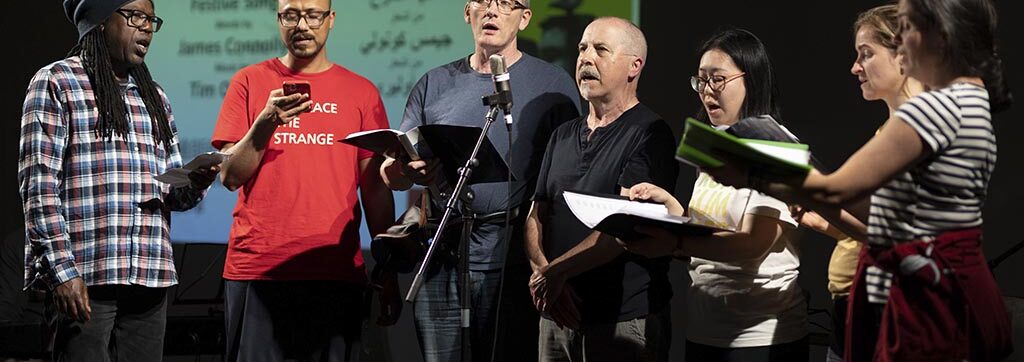
Tim O’Leary decided to honour his country of birth by creating a new setting of James Connolly’s Festive Song. Connolly born to Irish parents and brought up in the Cowgate, a slum area underneath the South Bridge which was built to join the city centre to the Southside known as “Little Ireland”. Connolly, an eloquent writer, dreamed of a society organised on cooperative lines for the benefit of all, a cause he would be executed for when he drew upon his military service to lead rebellion in Dublin in 1916.
Phil Westwell is a piper, whistler and pipe maker. Phil’s composition, “Lancashire’s Thread”, is inspired by the saying “Britain’s Bread hangs by Lancashire’s Thread” a clue to the part of England Phil calls home. The combination of an abundance of coal and fast running water led the North of England to be at the forefront of the Industrial revolution, the newly developing technology of steam powered looms transformed small rural villages into home for massive factories producing material for export throughout the Empire. Phil’s evocative composition introduces the cultural sounds of migrants from Pakistan from where, as members of the Commonwealth of Nations, migration was easier. Employers invited them to fill the labour shortages which arose in Britain after the Second World War. Phil’s piece is a powerful evocation of a culture and a place, and watch out for a surprise moment of local dancing.
Elaine Cheng’s family migrated to Edinburgh’s Southside from Hong Kong. As with India and Pakistan its historic links through Empire granted it’s citizens most British civic rights. In the 1970’s Elaine’s father, a tailor by profession, came to Edinburgh and found work in the burgeoning Chinese catering industry. On a return to Hong Kong, he met Elaine’s mother who sold flowers and fruit, hence the title of Elaine’s contribution “The Tailor and his Apple.” In dedicating her composition to her parent’s Elaine draws upon the beautiful but simple melodies of Canto Pop. In the 1970’s when Elaine’s father migrated Soap operas were needed to fill TV airtime, and popular Cantonese songs became TV theme songs. The term Cantopop was first coined by a Billboard correspondent who noted a change in the style of popular music in Hong Kong to something like British soft rock. Elaine’s passion has now led her into to creating Sonic Art an example of which is part of the Festival of Migration.
Samba Sene’s composition is called “Déséquilibre Sociale”. It is a song of mourning for the young lives lost on the boats that carry migrants from his home in Senegal to Spain. These are small personal fishing boats which can take up to 100 often young people, more than 500 lives have been lost on this crossing. But Senegal is a safe country with more people arriving than leaving so why make the perilous journey? Samba himself has long campaigned for the right of the Senegal community in Edinburgh to have a space to collectively express their right to a cultural life – a campaign Art 27 wholeheartedly supports. Samba’s first opportunity to express himself musically came as part of a traditional session run by Tim O’Leary – it gives us great pleasure to reunite them to create The Southside Symphony.
The final composition comes from Art27’s very own Saber Bamatraf. “Hadhrami Nights” was inspired by Hadhrami folklore. The melodic pattern of the prelude is based on the Bedouin and tribal melodies used during improvised poetic exchanges in ceremonies and occasions. It is believed that these primitive melodies have been sung since ancient times.
When Saber was young, he was intrigued by western classical music, and it was only later that he came to appreciate the beauty of Yemeni folk and traditional music/songs. As a result, he tends to present Yemeni music heritage in a western.